Choosing the right cover starts with how and where you park. A vehicle kept outdoors faces sun, rain, dust, and tree debris; a garage-kept car may need lighter protection from dust and accidental scratches. The best choice depends on your local conditions, parking routine, and vehicle shape—not just the fabric’s advertised features. In 2026, shoppers can compare breathable multilayer materials, soft inner linings, weather-resistant coatings, and custom-fit options. Each feature serves a different purpose. No single cover is ideal for every car.
To understand how to choose the right custom car cover, begin with accurate vehicle details, including its year, make, model, mirrors, and any rear spoiler or roof accessories. A close fit helps limit loose fabric rubbing against the paint, while carefully placed mirror pockets and secure straps can improve coverage in wind. Check the maker’s material specifications, care instructions, warranty terms, and fit policy before ordering. If possible, ask how the cover performs in your climate and whether it is safe for a damp vehicle; recommendations can vary by fabric and conditions. Small details matter. A custom cover is not automatically a perfect fit, and even good materials need proper care. Compare the practical trade-offs, then choose protection that matches your parking habits and your willingness to clean and store the cover. A little doubt is useful here. It encourages a more careful choice.
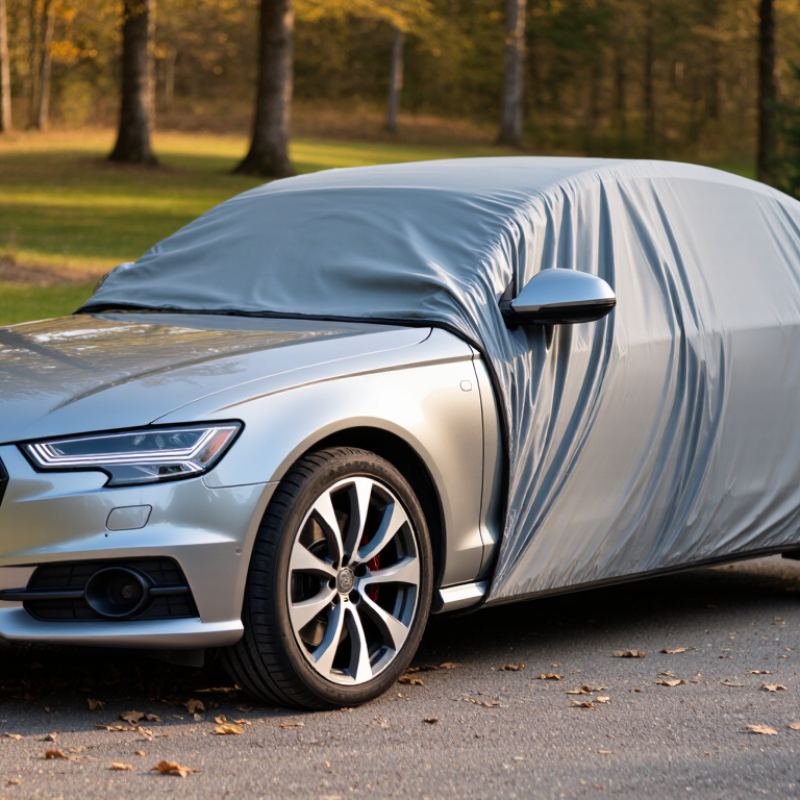
Assess the car before shopping. Note its body shape, roof accessories, antenna, and mirror position; a loose cover can flap against paint. Choose a tailored fit with soft inner fabric and secure fastenings. For garage storage, dust protection and breathability may matter most. Outdoors, consider sun, rain, tree sap, and wind. Fit matters.
Your parking spot changes the decision. The NOAA National Centers for Environmental Information recorded 28 U.S. weather and climate disasters with losses exceeding $1 billion in 2023. That national figure is not a forecast for your street, but it shows why local exposure matters. Check nearby trees, open wind corridors, and regional weather records. For hail-prone areas, seek a cover with impact padding, but do not assume any fabric prevents all damage.
Sun exposure deserves attention, even on cloudy days. The U.S. Environmental Protection Agency’s Sun Safety guidance says clouds can still allow up to 80% of UV radiation through. A UV-resistant outer layer can help limit exposure, while a breathable construction helps reduce trapped moisture. Before covering a dusty car, rinse or gently clean it; grit under fabric can mark the finish. I would also reconsider a very heavy cover if one person must fit it daily. A perfect specification on paper may become frustrating in real use.
A custom car cover should match both your local climate and where the vehicle spends its time. In hot, sunny areas, choose a fabric with strong UV resistance; prolonged exposure can fade paint and dry out rubber trim. For outdoor parking in wet weather, look for a fitted, water-resistant cover with breathable construction. Rain protection matters. A cover that traps moisture can encourage mildew, especially in humid climates.
Material layers affect comfort and protection. Lightweight woven polyester is easier to handle and can suit mild conditions, but it may offer limited protection from hail or sharp debris. Heavier multilayer fabrics usually provide better cushioning and weather resistance, though they can be bulky to remove. In a garage, a soft inner lining can help guard against dust and incidental scratches. Avoid putting any cover over a wet or dirty car; grit beneath the fabric may rub against the finish.
Storage conditions deserve a close look. A covered car in a dry garage needs less weather protection than one parked under trees through changing seasons. Check how the fabric manages condensation, and confirm that the size is tailored to your vehicle’s shape, including mirrors and spoilers. Labels can sound reassuring, but construction and fit matter more. There is no perfect material; I’d reconsider a heavy cover if you need to take it off every day.
A custom car cover should match the vehicle’s exact year, model, and body style. A sedan, hatchback, and wagon can share a name yet have different rooflines or rear contours. Check the trim level too, since mirrors, spoilers, and other factory features may change the fit. Small details matter.
List anything added to the exterior, including a roof rack, antenna, side steps, or a rear-mounted accessory. A cover cut for a bare roof may pull tight over a rack or leave exposed gaps around an altered mirror. Note whether the antenna is fixed or removable, and compare its position with the cover’s design. These checks can feel fussy, but they help prevent guesswork.
Use the seller’s vehicle-specific fit guide and confirm that listed features match your car, not just its model name. If uncertain, measure the overall length, width, and height, then ask how those measurements affect the cut. The cover should sit close without straining at corners or dragging on the ground. A close fit is useful, but it is not a guarantee against rubbing; wind, dust, and frequent movement can still wear fabric. Recheck the fit after installation.
A custom cover should breathe as well as shield. Look for a fabric that releases trapped moisture, especially if the car sits outdoors after rain. ASTM D737 measures air permeability in textiles, but a test result alone cannot predict performance on your vehicle. Fit, seams, and local humidity matter too. A soft inner lining helps reduce fine scratches; check that it stays smooth around mirrors and badges. Small details count.
Fasteners should hold the cover without dragging it across paint. Choose adjustable straps or reinforced tie-down points, and check that buckles rest away from painted panels. Too tight can strain seams; too loose can let fabric flap in wind. NOAA’s 2024 climate report recorded 27 U.S. weather and climate disasters with losses exceeding $1 billion each. It is broad national data, not a car-cover test, but it underlines why local exposure matters.
For added protection, match the cover to the risks: UV-resistant fabric for prolonged sun, reinforced panels for falling debris, and a water-resistant outer layer with a breathable construction. SEMA’s 2024 market report valued U.S. specialty-equipment sales at $52.3 billion in 2023, reflecting wide interest in vehicle upgrades—not proof that every extra feature is worthwhile. I would question claims of “all-weather” protection and inspect the care instructions. A thicker cover is not automatically safer; grit trapped underneath can still mark paint.
A custom fit can reduce loose fabric and help prevent rubbing against paint. But fit alone does not determine long-term value. Consider where the car is parked, how often you remove the cover, and whether it may get wet or dusty. Outdoor covers often need more frequent cleaning, while indoor covers still collect grit. Washability matters. Check the care label before buying; some materials require gentle washing or air-drying, which can be inconvenient.
Read the warranty terms closely. Look for coverage periods and exclusions involving fading, seam failure, water resistance, or damage from improper care. A long warranty may sound reassuring, but it matters less if routine wear is excluded. Keep your receipt and follow the stated cleaning instructions. Claims can depend on those details. I would not assume every defect is covered.
Compare the full cost, not just the purchase price. Include cleaning supplies, replacement costs, and the time needed to dry the cover properly. A cheaper option may cost more if it wears out quickly or needs special care. If the car sits outside under trees, easier cleaning could be worth paying extra for. There is no perfect choice. A durable, heavier cover may be awkward to handle, and that trade-off is easy to underestimate. Ask how the cover should be stored when damp, too.
Choose fabric with strong UV resistance. Long sun exposure can fade paint and dry rubber trim.
It helps, but breathable construction matters too. Trapped moisture can encourage mildew. Rain protection matters.
Lightweight woven polyester is easier to handle in mild conditions. Heavier layers add cushioning but can feel bulky. Not always convenient.
It’s better to wait until the car is clean and dry. Grit under the fabric may rub against the finish.
Match the year, model, and body style. Check details like roofline, mirrors, spoilers, and trim.
Yes. List roof racks, side steps, and other additions. Check whether the antenna is fixed or removable.
It should sit close without pulling at the corners or dragging on the ground. Recheck after installation.
Not completely. Wind, dust, and frequent movement can still cause rubbing. I’d reconsider a heavy cover if removing it daily feels like a chore.
Choosing the right custom car cover starts with understanding how your vehicle is used and where it is parked. Consider whether it stays outdoors, sits in a garage, or faces conditions such as intense sun, rain, dust, or snow. These factors help determine which material and level of protection suit your needs. A well-fitting cover should match your vehicle’s details, including its body style, mirrors, antenna, and other exterior features, so it stays secure without putting unnecessary pressure on the finish.
When deciding how to choose the right custom car cover, also compare practical details beyond fit and fabric. Breathable construction and a suitable inner lining can help reduce moisture buildup and surface abrasion, while reliable fasteners and added protective features can improve everyday use. Review cleaning and storage requirements, warranty coverage, and the total cost over time. Balancing climate suitability, fit, durability, maintenance, and price makes it easier to choose a cover that provides dependable protection for your particular vehicle and parking conditions.

Molas Auto