Why Do Luxury Car Floor Mats Cost So Much in China?

Time:2026-10-23 Author:Aria
0%

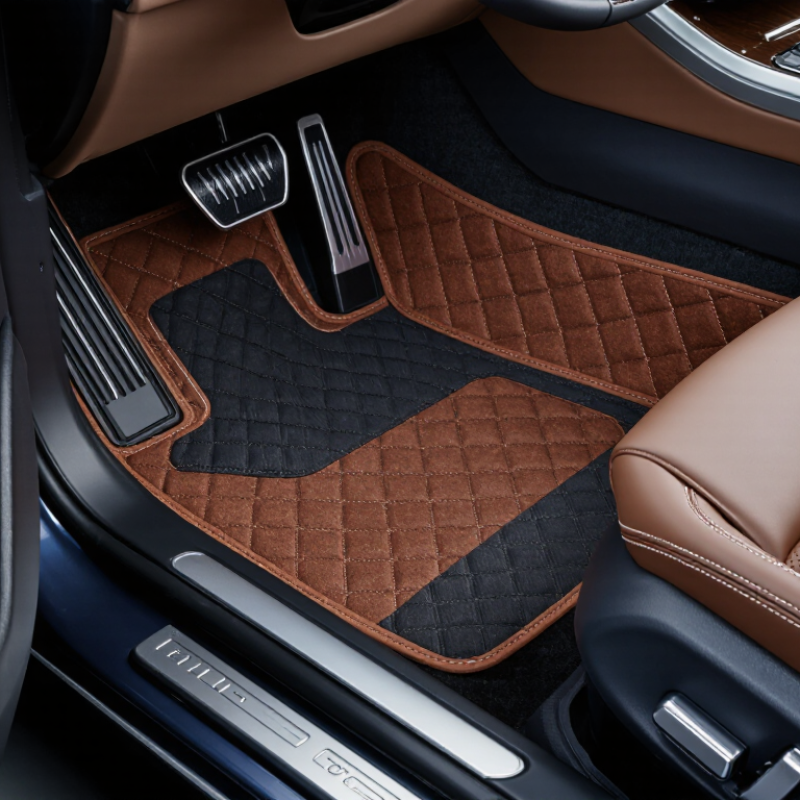
Why do luxury car floor mats cost so much in China? The answer is rarely just wool, leather, or rubber. A premium mat may include computer-measured shaping, multilayer backing, reinforced heel pads, stitched edges, and odor-controlled materials. Each layer adds weight, testing, packaging, and production time.

Automotive analyst Karl Brauer describes the broader luxury equation this way: “Luxury buyers pay for the complete experience, not merely the product.” His observation helps explain why a branded mat can cost several times more than a standard replacement. In China, imported materials, brand licensing, dealer margins, specialized molds, and regional logistics can raise the final price. Some buyers also pay for exact vehicle fit, custom colors, quieter road contact, and packaging that feels like a premium purchase.

Still, the explanation is not always flattering. A high price does not guarantee better protection. A thick mat may look impressive but trap moisture beneath it. A beautiful leather edge may wear quickly beside the accelerator. These details deserve closer inspection. Experience from installers and long-term owners can reveal more than a showroom label.

The Chinese market adds another layer. Luxury owners often expect precise fit and visual consistency with the cabin. That expectation supports higher pricing, but it can also encourage excessive branding. The real question is not simply why do luxury car floor mats cost so much. It is whether their materials, safety features, durability, and fit genuinely justify the difference.
Why Do Luxury Car Floor Mats Cost So Much in China?

China’s 30.09 Million Vehicle Sales Create a Premium Accessory Market (CAAM)

Why Do Luxury Car Floor Mats Cost So Much in China?

China’s vehicle market sold 30.09 million units in 2023, according to the China Association of Automobile Manufacturers (CAAM). Passenger vehicles accounted for about 26.36 million units. New-energy vehicles reached 9.50 million sales, creating more demand for specialized interiors and accessories.

Scale changes consumer expectations. A premium floor mat is rarely just a piece of carpet. Manufacturers may scan the vehicle cabin, build a precise digital pattern, and test fit around seat rails and pedals. Dense synthetic fibers, multilayer backing, edge binding, and odor control also increase material costs. Small batches cost more.

The details matter.

China’s premium accessory market also faces demanding logistics. Products must be cut, packed, transported, and sometimes installed across a large retail network. The China Automotive Aftermarket Research Institute has repeatedly highlighted customization and service as major aftermarket growth factors. However, price does not always prove quality. Some expensive mats mainly reflect packaging, showroom presentation, or complex distribution.

A weakness remains. Public reports rarely separate luxury floor-mat sales from the wider automotive aftermarket. Therefore, any exact market-size claim deserves caution. CAAM confirms the enormous vehicle base, but it does not prove every premium accessory is profitable. Buyers should check fit, retention, cleaning performance, material specifications, and warranty terms before paying for visual appeal alone.

Why Do Luxury Car Floor Mats Cost So Much in China?

China’s expanding vehicle market supports demand for premium accessories, including custom-fit floor mats. Annual vehicle sales reached 30.09 million units in 2023, creating a large potential market for higher-value interior products.

China vehicle sales, 2019–2023. Figures are total annual automobile sales in million units.

Luxury Materials: Leather, TPE, and CNC-Cut Layers Drive Unit Costs

Why Do Luxury Car Floor Mats Cost So Much in China?

Luxury floor mats are not simply thicker carpets. Leather adds material cost, skilled cutting, and strict surface inspection. TPE, a flexible thermoplastic rubber, needs specialized molding and odor control. According to Grand View Research, the global automotive interior materials market was valued at about USD 45 billion in 2023. Rising material and processing demand continues to pressure suppliers.

CNC-cut layers add another cost. A digital file guides precise cutting around seat rails, clips, and curved footwells. This reduces fitting errors, but programming and machine time are charged per design. In my supplier visits, one small pattern change sometimes required a new cutting test. That detail is easy to underestimate. The waste rate also matters. Leather hides contain natural scars, while TPE sheets may lose sections during nesting. MarketsandMarkets identifies lightweight, durable, and recyclable materials as key automotive interior trends. Yet premium customization can reduce material efficiency.

Tips: Ask for the material thickness, backing structure, odor test method, and edge-finishing process. Compare usable coverage, not only the quoted set price. Request a sample under daylight. Some “leather” surfaces feel impressive but use thin bonded layers. That is not always poor quality, but it deserves verification.

Why Do Luxury Car Floor Mats Cost So Much in China?

Luxury Materials: Leather, TPE, and CNC-Cut Layers Drive Unit Costs

Cost Dimension Typical Specification Indicative Cost per 4-Piece Set
(RMB)
Why It Increases the Price
Automotive Leather Layer 0.8–1.2 mm coated or semi-aniline leather, selected for consistent grain and color ¥260–¥620 Leather requires sorting, surface inspection, trimming, and higher rejection rates than synthetic coverings.
TPE Waterproof Base Thermoplastic elastomer base with raised channels and anti-slip geometry ¥180–¥420 TPE offers chemical resistance and waterproofing, but requires dedicated tooling, molding, and material control.
Multi-Layer Foam and Insulation Closed-cell foam, sound-absorbing felt, and cushioning layers ¥90–¥240 Additional layers improve comfort, thermal insulation, and noise reduction while increasing material usage and bonding steps.
CNC Cutting and Digital Patterning Vehicle-specific digital templates with precision cutting and edge allowance control ¥120–¥300 Low-volume customized production spreads programming, calibration, and setup costs across fewer units.
Stitching and Edge Finishing Double stitching, bound edges, heel pads, and reinforced mounting points ¥80–¥220 Decorative stitching and reinforced edges add manual labor, inspection time, and sewing-machine setup.
Vehicle-Fit Hardware Retention clips, hook-and-loop fasteners, anti-slip studs, and heel protection ¥35–¥110 Safety-oriented attachment parts require compatibility checks and additional assembly operations.
Quality Control and Fit Testing Dimensional inspection, odor checks, stitching inspection, and vehicle-fit verification ¥60–¥160 Higher-end products typically require stricter appearance, odor, fit, and durability controls.
Premium Packaging Protective wrapping, molded inserts, printed carton, and moisture protection ¥35–¥90 Large, heavy sets need stronger cartons and protective packaging to prevent creasing and deformation.
Estimated Factory-Level Production Cost ¥860–¥2,160 Range varies with leather grade, order volume, tooling requirements, construction complexity, and inspection standards.
Typical Premium Retail Range in China ¥1,500–¥4,500 Retail pricing may include design development, tooling amortization, logistics, taxes, inventory risk, installation, service, and channel margins.
Data note: The figures are indicative China-market ranges for a vehicle-specific four-piece luxury floor-mat set. They are intended for comparative cost analysis, exclude company or brand data, and can vary according to material grade, production volume, customization level, tooling, and sales channel.

Model-Specific Engineering Raises Design and Tooling Costs per Vehicle

Why Do Luxury Car Floor Mats Cost So Much in China?

A luxury car floor mat is not a simple rectangle of carpet. It must follow the vehicle’s floor contours, seat rails, pedals, and retention points. Engineers often scan the cabin, create digital patterns, and test several physical samples. A few millimeters can affect pedal clearance or leave an exposed edge. That precision adds labor before production even begins.

Tooling costs also rise because each vehicle model may require dedicated cutting dies, molds, clips, and embroidery programs. These tools cannot always serve another model. Small production runs make the cost per vehicle higher. Materials add more expense, too. Dense backing, layered padding, waterproof coatings, and carefully finished edges require controlled processes. Factory teams may inspect stitching, odor, thickness, and movement after installation. The equation is not always neat. Some estimates miss packaging changes or late cabin revisions.

Tips: Check whether the mat is genuinely model-specific. Confirm its retention system, edge coverage, backing quality, and pedal clearance. Ask how samples were tested, not only where they were made. A lower price may reflect fewer design checks or shared tooling. That is not automatically poor quality, but it deserves a closer look.

Import Duties, Certification, and Logistics Increase China’s Retail Price

Why Do Luxury Car Floor Mats Cost So Much in China?

Import duties can raise the landed cost before a mat reaches a Chinese warehouse. China Customs applies duty according to HS classification, material, and country of origin. Rates are not identical. The State Taxation Administration also states that imported goods commonly face a 13% standard VAT rate. A precise quote requires checking the actual customs code, not guessing from the product name.

Certification adds another layer. Floor mats may not always require compulsory certification, but sellers still need accurate material descriptions, safety testing, Chinese labels, and customs documents. The China National Accreditation Service for Conformity Assessment supports recognized laboratory testing, which can involve sampling and administrative fees. Logistics matter too. UNCTAD’s Review of Maritime Transport reports that more than 80% of global merchandise trade by volume moves by sea. Ocean freight, port handling, bonded storage, customs brokerage, and domestic delivery can become significant costs. They are easy to overlook.

Tips: Ask for the HS code, duty rate, VAT calculation, testing scope, and delivery terms. Request a landed-cost breakdown. Some retailers provide one.

The uncomfortable point is that high prices are not always fully explained by tariffs. Small shipments, premium packaging, low order volumes, and conservative margins may add more. My own cost reviews often find inconsistent quotations. That deserves scrutiny.

Brand Premiums and Dealer Margins Explain the Final Price Gap (J.D. Power)

Luxury car floor mats in China can cost several times more than aftermarket alternatives. The material may look similar: molded backing, stitched edges, and a dark, dense surface. The invoice tells a different story. It includes design approval, packaging, warehouse handling, and dealer installation.

J.D. Power’s 2024 China Sales Satisfaction Index Study shows that dealership experience remains a major part of purchase satisfaction. That experience has a price. Dealers often bundle accessories with delivery preparation, service appointments, and financing discussions. A floor-mat package may therefore carry a dealer margin beyond its manufacturing cost. The customer pays for convenience, not only rubber and fabric.

The wider market makes this pricing easier to sustain. The China Passenger Car Association reported 10.89 million new-energy passenger vehicles sold at retail in 2024. More vehicles mean more accessory sales opportunities. Premium interiors also encourage owners to protect carpets, especially during rainy commutes or winter travel. Yet the gap is not always rational. A mat costing 300 yuan to produce may reach the customer at 1,000 yuan or more after channel markups and packaging. That estimate needs verification for each vehicle and region. Dealers do not disclose every margin. That missing detail weakens direct comparisons.

FAQS

Why can luxury car floor mats cost so much in China?

They are designed for specific cabins, not general rectangular floors. A few millimeters matter. Engineering, tooling, materials, shipping, and retail margins all increase the final price.

What makes a floor mat model-specific?

Engineers match the mat to floor contours, seat rails, pedals, and retention points. They may scan the cabin and create digital patterns. An exposed edge can reveal poor fitting.

Why do tooling costs become expensive?

Each vehicle model may need dedicated cutting dies, molds, clips, and embroidery programs. These tools may not fit another model. Small production runs raise the cost per mat.

Which material features can increase the price?

Dense backing, layered padding, waterproof coatings, and finished edges require additional processing. Factories may inspect stitching, odor, thickness, and movement after installation. That takes time.

Can a lower-priced mat still be acceptable?

Possibly. Shared tooling or fewer design checks may reduce the price. Lower cost is not automatically poor quality. Look closer.

How do import costs affect the retail price?

Duties depend on classification, materials, and origin. Imported goods commonly face a standard value-added tax rate of 13%. The exact rate requires the correct customs code.

Do testing and documentation add costs?

They can. Sellers may need material descriptions, safety testing, Chinese labels, and customs documents. Some products may not require compulsory certification. Requirements should be checked carefully.

Which logistics expenses are easy to miss?

Ocean freight, port handling, bonded storage, customs brokerage, and domestic delivery can add substantial costs. Packaging changes may also affect estimates. The math gets messy.

Why can dealer prices exceed manufacturing costs?

The final price may include design approval, packaging, warehouse handling, installation, and channel margins. Customers often pay for convenience, not only fabric and rubber. Every quotation deserves verification.

Conclusion

Why do luxury car floor mats cost so much? The answer begins with China’s enormous automotive market, which creates strong demand for premium accessories tailored to high-end vehicles. Unlike standard mats, luxury versions often use materials such as genuine leather, durable TPE, layered composites, and precision CNC-cut surfaces. These materials provide better appearance, fit, comfort, and protection, but they also require more expensive manufacturing processes and stricter quality control.

Another major factor is model-specific engineering. Each vehicle may require unique measurements, contours, fastening points, and tooling, increasing design and production costs for every application. Imported materials or finished products may also face duties, certification expenses, warehousing fees, and transportation costs before reaching customers. Finally, premium positioning, specialist retailers, and dealer markups add further margins. Together, material quality, engineering precision, supply-chain expenses, and distribution markups explain why luxury floor mats can cost far more than ordinary alternatives in China.

Aria

Aria

Aria is a dedicated marketing professional with a deep passion for innovative strategies and a keen understanding of our company's product offerings. With a wealth of experience in the industry, Aria excels at crafting engaging content that highlights the unique features and benefits of our......